✨ New Arrivals Just Dropped!Explore
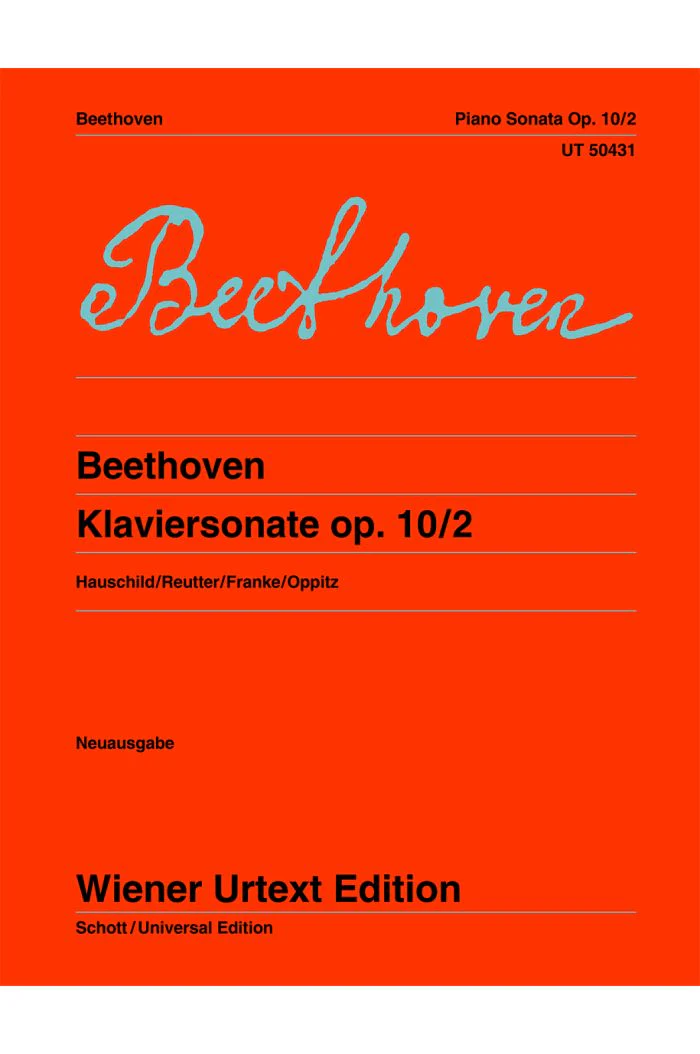
Beethoven Piano Sonata op. 10/2
Beethoven's Sonata in F major Op. 10/2, like its sister Op. 10/1 in C minor, is one of the most frequently played works in piano lessons and piano studies. In contrast to the darker and more abrupt tones of Op. 10/1, the F major Sonata is characterized by cheerfulness, even sparkling humour, which is only interrupted by more contemplative tones in the F minor middle movement. With the autograph lost, the new edition is based on the first edition published in 1798. Moreover, it draws on contemporary early prints to back up the musical text. Readings that only appeared in the later 19th century have been eliminated from the musical text, but their origin has been explained in the Critical Notes. The edition thus offers an excellent basis for lessons and concerts.
Product Information
Product Information
Shipping & Returns
Shipping & Returns
Beethoven Piano Sonata op. 10/2
Beethoven Piano Sonata op. 10/2
Beethoven's Sonata in F major Op. 10/2, like its sister Op. 10/1 in C minor, is one of the most frequently played works in piano lessons and piano studies. In contrast to the darker and more abrupt tones of Op. 10/1, the F major Sonata is characterized by cheerfulness, even sparkling humour, which is only interrupted by more contemplative tones in the F minor middle movement. With the autograph lost, the new edition is based on the first edition published in 1798. Moreover, it draws on contemporary early prints to back up the musical text. Readings that only appeared in the later 19th century have been eliminated from the musical text, but their origin has been explained in the Critical Notes. The edition thus offers an excellent basis for lessons and concerts.
$3.13
Original: $8.95
-65%Beethoven Piano Sonata op. 10/2—
$8.95
$3.13Product Information
Product Information
Shipping & Returns
Shipping & Returns
Description
Beethoven's Sonata in F major Op. 10/2, like its sister Op. 10/1 in C minor, is one of the most frequently played works in piano lessons and piano studies. In contrast to the darker and more abrupt tones of Op. 10/1, the F major Sonata is characterized by cheerfulness, even sparkling humour, which is only interrupted by more contemplative tones in the F minor middle movement. With the autograph lost, the new edition is based on the first edition published in 1798. Moreover, it draws on contemporary early prints to back up the musical text. Readings that only appeared in the later 19th century have been eliminated from the musical text, but their origin has been explained in the Critical Notes. The edition thus offers an excellent basis for lessons and concerts.