Gluck: Atto d'Orfeo
In 1768, Empress Maria Theresa asked Gluck to compose a festive opera to mark the marriage of her daughter Maria Amalia to Ferdinand of Spain in Parma. The composer accepted the commission and created "Le feste d'Apollo", consisting of several one-act works, including "Atto d'Orfeo". This was a new version of the azione teatrale "Orfeo ed Euridice", which had been premiered in Vienna in 1762 and which was reworked for Paris in 1774. Gluck transposed the title role up for the famous soprano castrato Giuseppe Millico, so that Orpheus' famous aria "Che farò senza Euridice", for example, is in E-flat Major instead of C Major.
Product Information
Product Information
Shipping & Returns
Shipping & Returns

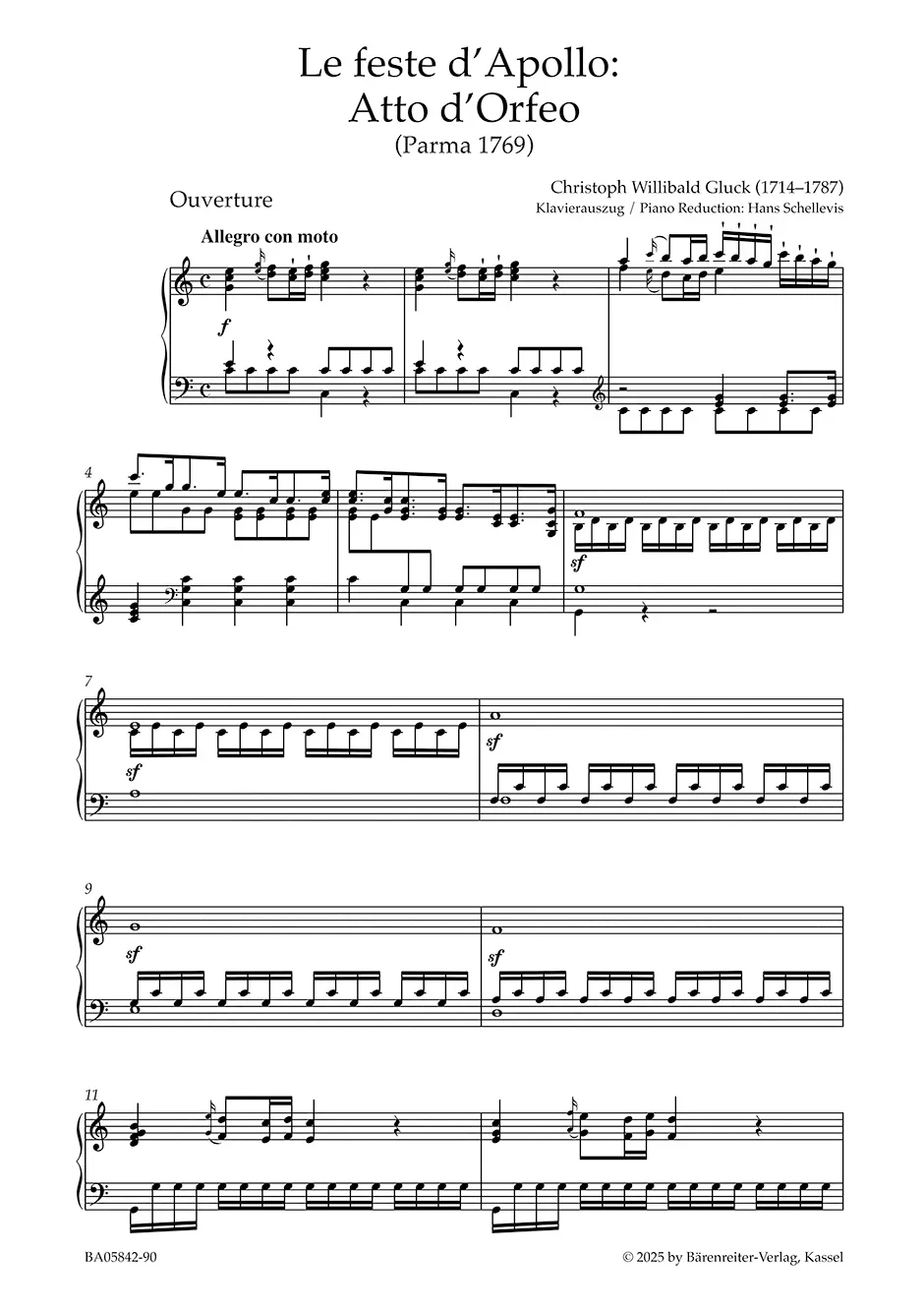


Gluck: Atto d'Orfeo
Gluck: Atto d'Orfeo
In 1768, Empress Maria Theresa asked Gluck to compose a festive opera to mark the marriage of her daughter Maria Amalia to Ferdinand of Spain in Parma. The composer accepted the commission and created "Le feste d'Apollo", consisting of several one-act works, including "Atto d'Orfeo". This was a new version of the azione teatrale "Orfeo ed Euridice", which had been premiered in Vienna in 1762 and which was reworked for Paris in 1774. Gluck transposed the title role up for the famous soprano castrato Giuseppe Millico, so that Orpheus' famous aria "Che farò senza Euridice", for example, is in E-flat Major instead of C Major.
Original: $46.95
-65%$46.95
$16.43Product Information
Product Information
Shipping & Returns
Shipping & Returns
Description
In 1768, Empress Maria Theresa asked Gluck to compose a festive opera to mark the marriage of her daughter Maria Amalia to Ferdinand of Spain in Parma. The composer accepted the commission and created "Le feste d'Apollo", consisting of several one-act works, including "Atto d'Orfeo". This was a new version of the azione teatrale "Orfeo ed Euridice", which had been premiered in Vienna in 1762 and which was reworked for Paris in 1774. Gluck transposed the title role up for the famous soprano castrato Giuseppe Millico, so that Orpheus' famous aria "Che farò senza Euridice", for example, is in E-flat Major instead of C Major.


