Korngold in America Music, Myth, and Hollywood
Ben Winters
Korngold in America offers new ways of listening to the film scores and post-Hollywood concert works of Erich Wolfgang Korngold (1897-1957), a Viennese-raised Austro-Hungarian composer who left Europe for Hollywood in the mid-1930s to write for Warner Bros. It reassesses Korngold's place in twentieth-century music historiography and dismantles many of the myths that have obscured a proper understanding of his work.
Drawing on previously unpublished archival materials, Korngold in America reveals Korngold's commercial and artistic relationships with studio processes and staff, highlights aspects of his compositional practice, and traces the way in which he adapted his skills as a musical dramatist and experienced opera composer to the demands of film. The book presents a more complete picture of Korngold's artistry than has hitherto been possible, showing both the important role played by his music in the Hollywood films of which it is a part and the importance in turn of Hollywood films for his compositional identity. In so doing, it challenges assumptions about the relationship between Korngold's film scores and his works for the concert hall and opera house in ways that draw attention to the significance of Hollywood for histories of twentieth-century music
Product Information
Product Information
Shipping & Returns
Shipping & Returns
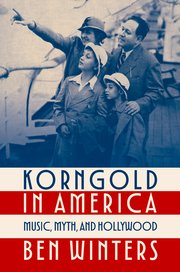
Korngold in America Music, Myth, and Hollywood
Korngold in America Music, Myth, and Hollywood
Ben Winters
Korngold in America offers new ways of listening to the film scores and post-Hollywood concert works of Erich Wolfgang Korngold (1897-1957), a Viennese-raised Austro-Hungarian composer who left Europe for Hollywood in the mid-1930s to write for Warner Bros. It reassesses Korngold's place in twentieth-century music historiography and dismantles many of the myths that have obscured a proper understanding of his work.
Drawing on previously unpublished archival materials, Korngold in America reveals Korngold's commercial and artistic relationships with studio processes and staff, highlights aspects of his compositional practice, and traces the way in which he adapted his skills as a musical dramatist and experienced opera composer to the demands of film. The book presents a more complete picture of Korngold's artistry than has hitherto been possible, showing both the important role played by his music in the Hollywood films of which it is a part and the importance in turn of Hollywood films for his compositional identity. In so doing, it challenges assumptions about the relationship between Korngold's film scores and his works for the concert hall and opera house in ways that draw attention to the significance of Hollywood for histories of twentieth-century music
Original: $39.99
-65%$39.99
$14.00Product Information
Product Information
Shipping & Returns
Shipping & Returns
Description
Ben Winters
Korngold in America offers new ways of listening to the film scores and post-Hollywood concert works of Erich Wolfgang Korngold (1897-1957), a Viennese-raised Austro-Hungarian composer who left Europe for Hollywood in the mid-1930s to write for Warner Bros. It reassesses Korngold's place in twentieth-century music historiography and dismantles many of the myths that have obscured a proper understanding of his work.
Drawing on previously unpublished archival materials, Korngold in America reveals Korngold's commercial and artistic relationships with studio processes and staff, highlights aspects of his compositional practice, and traces the way in which he adapted his skills as a musical dramatist and experienced opera composer to the demands of film. The book presents a more complete picture of Korngold's artistry than has hitherto been possible, showing both the important role played by his music in the Hollywood films of which it is a part and the importance in turn of Hollywood films for his compositional identity. In so doing, it challenges assumptions about the relationship between Korngold's film scores and his works for the concert hall and opera house in ways that draw attention to the significance of Hollywood for histories of twentieth-century music