Schumann Arabeske Op. 4 and Blumenstuck Op. 19
Piano Solo edited by Holger Stuwe
Schumann’s “Arabeske” and “Blumenstück” were both composed while he was living in Vienna from October 1838 to April 1839, and are thus companions to such major piano pieces as the “Fantasy in C major” (op. 17), the “Humoresque” (op. 20) and the cycles “Nachtstücke” (op. 23) and “Faschingsschwank aus Wien” (op. 26). Unlike these masterpieces, they are more ingratiating, possibly as a concession to the Viennese public; but whether the “Arabeske” is a “delicate piece for the ladies”, as Schumann once maintained, is open to debate.
For our new edition of these popular pieces the editor has re-evaluated the surviving sources, devoting special attention to the placement of slurs and incorporating the latest findings in Schumann scholarship. Rounding off the volume are a clear and uncluttered engraving, practical page turns and informative notes on historical performance practice by Sezi Seskir, a fortepiano specialist from Bucknell University (Lewisburg, PA) with a special interest in Schumann’s pianism as well as 18th- and 19th-century performance practice.
Product Information
Product Information
Shipping & Returns
Shipping & Returns
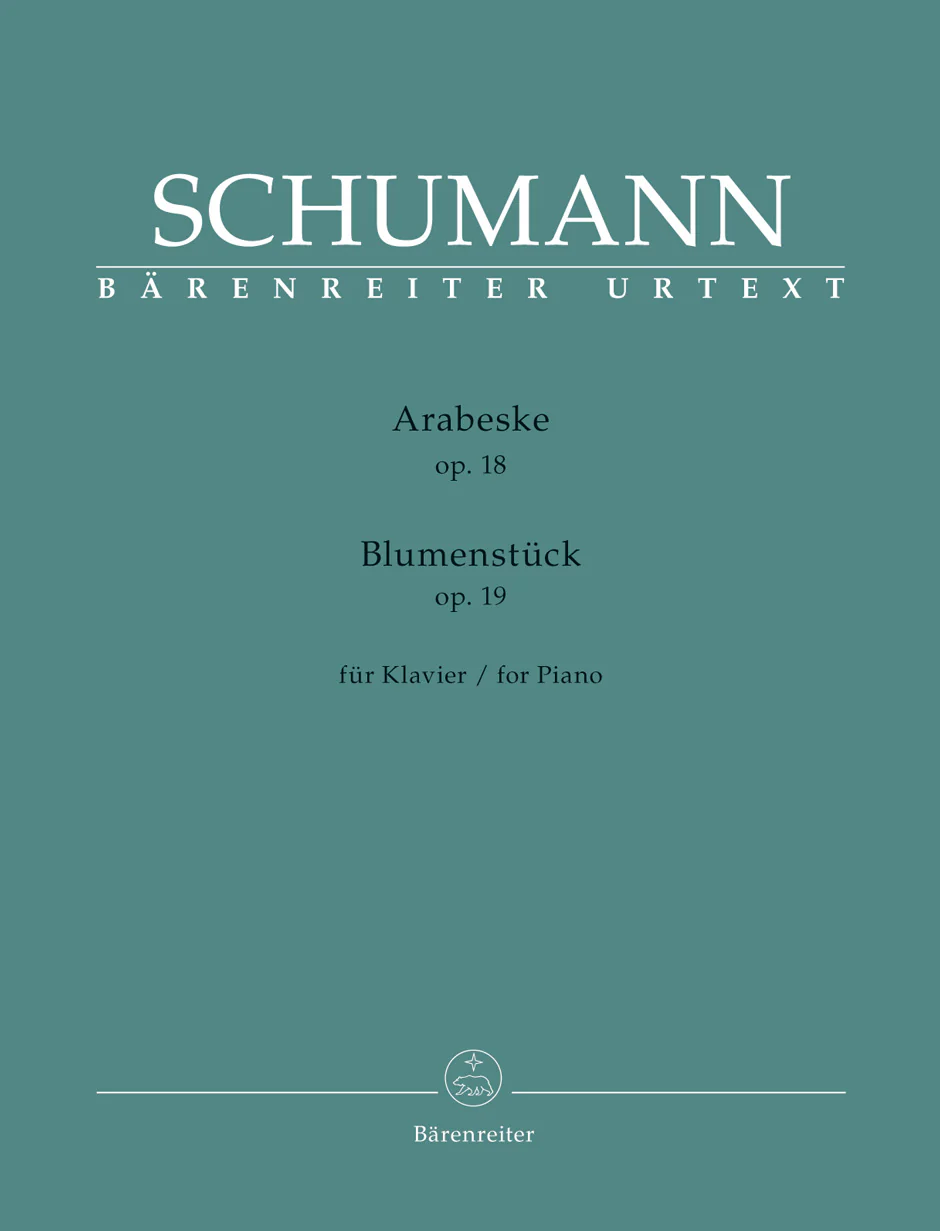
Schumann Arabeske Op. 4 and Blumenstuck Op. 19
Schumann Arabeske Op. 4 and Blumenstuck Op. 19
Piano Solo edited by Holger Stuwe
Schumann’s “Arabeske” and “Blumenstück” were both composed while he was living in Vienna from October 1838 to April 1839, and are thus companions to such major piano pieces as the “Fantasy in C major” (op. 17), the “Humoresque” (op. 20) and the cycles “Nachtstücke” (op. 23) and “Faschingsschwank aus Wien” (op. 26). Unlike these masterpieces, they are more ingratiating, possibly as a concession to the Viennese public; but whether the “Arabeske” is a “delicate piece for the ladies”, as Schumann once maintained, is open to debate.
For our new edition of these popular pieces the editor has re-evaluated the surviving sources, devoting special attention to the placement of slurs and incorporating the latest findings in Schumann scholarship. Rounding off the volume are a clear and uncluttered engraving, practical page turns and informative notes on historical performance practice by Sezi Seskir, a fortepiano specialist from Bucknell University (Lewisburg, PA) with a special interest in Schumann’s pianism as well as 18th- and 19th-century performance practice.
Original: $21.95
-65%$21.95
$7.68Product Information
Product Information
Shipping & Returns
Shipping & Returns
Description
Piano Solo edited by Holger Stuwe
Schumann’s “Arabeske” and “Blumenstück” were both composed while he was living in Vienna from October 1838 to April 1839, and are thus companions to such major piano pieces as the “Fantasy in C major” (op. 17), the “Humoresque” (op. 20) and the cycles “Nachtstücke” (op. 23) and “Faschingsschwank aus Wien” (op. 26). Unlike these masterpieces, they are more ingratiating, possibly as a concession to the Viennese public; but whether the “Arabeske” is a “delicate piece for the ladies”, as Schumann once maintained, is open to debate.
For our new edition of these popular pieces the editor has re-evaluated the surviving sources, devoting special attention to the placement of slurs and incorporating the latest findings in Schumann scholarship. Rounding off the volume are a clear and uncluttered engraving, practical page turns and informative notes on historical performance practice by Sezi Seskir, a fortepiano specialist from Bucknell University (Lewisburg, PA) with a special interest in Schumann’s pianism as well as 18th- and 19th-century performance practice.


